
NDIS and Sensory Toys Australia 2026: What's Funded, How to Claim & What to Buy
By Tinnitots Team • Updated May 2026 • 8 min read • Verified against ndis.gov.au and April 2026 legislation
If your child has autism, ADHD, sensory processing disorder (SPD), or another disability, you have probably heard about the benefits of sensory play equipment and wondered whether the NDIS will help pay for it.
The short answer is: in many cases, yes. But there has been a lot of misinformation circulating about what the 2026 NDIS law changes actually mean for families. This guide is verified against official NDIS sources and the most recent legislation as of May 2026, with every claim linked to its source.
Whether you are in Melbourne, Sydney, Brisbane, Perth, Adelaide or regional Australia, here is what you actually need to know.
|
FACT CHECK What we verified for this edition (May 2026) |
|
Every factual claim in this article is sourced against official NDIS and government documents: |
|
[1] ndis.gov.au — Supports funded by the NDIS |
|
[2] ndis.gov.au — Assistive Technology Explained (updated April 2026) |
|
[3] ndis.gov.au — Reasonable and Necessary Supports |
|
[4] ndis.gov.au — Pricing Arrangements and Price Limits 2025-26 (effective 24 Nov 2025) |
|
[5] ndis.gov.au — Summary of Legislation Changes (current as of 3 May 2026) |
|
[6] Dept of Health — Amendments to the NDIS Act |
|
[7] NDIS Amendment (Integrity and Safeguarding) Act 2026 (Royal Assent 8 April 2026) |
|
[8] Dept of Health — Securing the NDIS for Future Generations (May 2026) |
|
Full source list with URLs at end of article. |
|
⚠️ Three waves of NDIS law change: what's happened and what's coming [5][6][7][8] |
|
WAVE 1 — 3 October 2024: NDIS Amendment (Getting the NDIS Back on Track No.1) Act [5][6] |
|
• First-ever formal NDIS Supports list and Exclusions list published |
|
• Replacement Supports framework introduced for borderline items |
|
• Funding periods introduced (rolled out from 19 May 2025) |
|
• Impairment categories introduced for new participants from 1 January 2025 |
|
WAVE 2 — 8 April 2026: NDIS Amendment (Integrity and Safeguarding) Act 2026 [7] |
|
• Stronger NDIS Commission enforcement and faster intervention powers |
|
• Civil penalty up to $82,500 for providers making misleading NDIS funding claims |
|
• Fully electronic claiming being introduced |
|
• NDIA could withhold payment if documentation not provided within 14 days |
|
• 90-day cooling-off period for participants wishing to leave the NDIS |
|
• Expanded whistleblower protections |
|
WAVE 3 — Upcoming: 'Securing the NDIS for Future Generations' Bill (expected post 2026-27 Budget) [8] |
|
• I-CAN v6 functional capacity assessments — new framework planning delayed to 1 April 2027 |
|
• Social & community participation budget resets from 1 October 2026 |
|
• Thriving Kids program for children 8 and under from 1 October 2026 |
|
• Plan management commissioning model from 1 October 2027 |
|
KEY FACT: None of these three waves change the core sensory AT/Consumables funding rules, the $1,500 low-cost AT threshold, or the three budget types (Core, Capital, Capacity Building). [2][4][5] |
1. What is sensory play equipment and why does the NDIS recognise it?
Sensory play equipment refers to toys, tools and physical structures that stimulate a child's senses: touch (tactile), movement (vestibular), body-position awareness (proprioception), sight and sound. For children with sensory processing differences, these items have therapeutic value beyond recreation.
Occupational therapists commonly prescribe sensory equipment to support:
• Emotional self-regulation and reduced anxiety
• Improved concentration and focus at school
• Gross and fine motor skill development
• Body awareness and coordination
• Calming strategies for sensory-seeking or sensory-avoidant children
Because these outcomes relate directly to disability-related functional needs, they can fall within the NDIS — when the specific item and the individual participant's need meet the 'reasonable and necessary' criteria. [1][3]
2. The 'reasonable and necessary' criteria — what NDIS actually checks
Every NDIS support, including sensory equipment, must meet the reasonable and necessary criteria in Section 34 of the NDIS Act. According to official NDIS guidance [3], a support must:
• Be related to the participant's disability (not day-to-day living costs unrelated to disability needs, such as groceries) [3]
• Be effective and beneficial — supported by evidence or allied health professional advice [3]
• Represent value for money compared to alternatives [3]
• Not be more appropriately funded by other government services (e.g. Medicare, education) [3]
• Take into account informal support from family, carers and community [3]
• Be appropriate in terms of safety [2]
|
💡 2026 key principle: function over label [1] |
|
The NDIS funds a participant's specific functional needs, not product categories or marketing labels. [1] |
|
A generic toy sold as 'sensory' is unlikely to be funded. |
|
An orthopaedic mat recommended in writing by an OT to address a specific child's proprioceptive regulation needs is a much stronger case. |
|
Source: NDIS — Supports funded by the NDIS [1] |
3. What sensory equipment can be funded by the NDIS?
The NDIS funds sensory equipment across two main budget types: Core Supports (Consumables) for lower-cost items, and Assistive Technology under Capital Supports for equipment requiring formal assessment. [2]
|
Category |
Examples |
Funding path |
Source |
|
Tactile sensory mats |
Orthopaedic textured mats (e.g. MUFFIK), sensory puzzle floor tiles |
Core Consumables / Low-cost AT under $1,500 |
[2][4] |
|
Calming & regulation tools |
Weighted lap pads, fidget tools, chew jewellery, oral sensory aids |
Core Consumables — link to plan goals |
[2] |
|
Noise-cancelling headphones |
Where sensory sensitivity affects daily functioning |
AT Consumables or Capital AT |
[2][11] |
|
Adaptive clothing |
Compression garments, seamless clothing for tactile sensitivity |
Core Consumables |
[9] |
|
Sensory climbing equipment |
Indoor wall bars, climbing frames with sensory ladders |
Capital AT — higher-risk, OT prescription required |
[2] |
|
STEM & Montessori learning toys |
Wooden puzzles, magnetic tiles, cause-and-effect kits |
Core Consumables — must link to disability-related goals |
[1][2] |
|
Visual & calming tools |
Sensory lighting, calm-down kits, visual schedules |
Core Consumables |
[9] |
|
Multi-sensory room kits |
Wall panels, sensory room equipment |
Capital AT — over $1,500 requires evidence |
[9][11] |
|
❌ What is NOT funded — sensory category [1][2] |
|
Standard trampolines — classified as everyday recreational equipment [1] |
|
Generic swings — not funded unless specifically prescribed as higher-risk AT [2] |
|
Standard balls, bean bags, Play-Doh — general household recreational items [1] |
|
Any item on the NDIS formal exclusions list (published October 2024) [1][5] |
|
Everyday lifestyle items a household would purchase regardless of disability [1][3] |
|
October 2024 clarification: The NDIS published its first-ever formal Supports and Exclusions lists in October 2024. Participants who mistakenly claim an excluded item worth less than $1,500 will not have a debt raised for a first or second mistake. [10] |
|
April 2026 addition: Providers face civil penalties up to $82,500 for making misleading claims about what is NDIS-funded. [7] Tinnitots only provides invoices for products listed on the website. |
4. The three AT cost tiers — confirmed for 2025-26
The NDIS Pricing Arrangements and Price Limits 2025-26 (Version 1.1, effective 24 November 2025) confirm three AT cost tiers: [2][4]
|
Tier |
Price per item |
What's needed |
Budget |
|
Low-cost AT |
Under $1,500 |
No formal NDIA quote required. OT note recommended; required for higher-risk items. Must link to plan goals. |
Core Consumables (Cat 03) or Capital AT (Cat 05) [2][4] |
|
Mid-cost AT |
$1,500 to $15,000 |
No formal quote required (NDIA updated this rule in 2022 [2]). Written OT or therapist evidence required. |
Capital Supports — AT [2] |
|
High-cost AT |
Over $15,000 |
Formal assessment, quotes and NDIA approval before purchase. |
Capital Supports — AT [2] |
Source: ndis.gov.au — Assistive Technology Explained [2] and NDIS Pricing Arrangements 2025-26 [4]
|
🔴 Higher-risk AT — unchanged rule, stricter enforcement from April 2026 [2][7] |
|
Certain items require NDIA approval before purchase regardless of price — even items under $1,500. This is because they carry a risk of harm if incorrectly selected or used. [2] |
|
Higher-risk sensory items include: |
|
• Sensory swings and vestibular equipment [2] |
|
• Body socks and compression suits [2] |
|
• Indoor climbing structures [2] |
|
• Weighted blankets in some circumstances [2] |
|
An OT must complete a risk assessment confirming safety and suitability for the specific participant. The April 2026 Integrity Act gives the NDIS Commission enhanced powers to audit providers who process higher-risk AT without proper documentation. [7] |
5. Funding periods — new from May 2025 [5][6]
From 19 May 2025, all new and reassessed NDIS plans include funding periods — set blocks of time within which each funding component is available. [5][6]
Each funding component (Core, Capacity Building, Capital) has its own funding period. Providers must confirm that a participant has sufficient funding within the active funding period before claiming. [6]
What this means for sensory equipment purchases: Before ordering, check with your plan manager that the relevant funding period is currently active. This does not change what you can buy — only when within your plan you can access the budget.
6. How to claim sensory equipment using your NDIS funding in 2026
There are three plan management types. Under the April 2026 Integrity Act [7], all claiming is moving to a fully electronic system, approved claim forms must be published on the NDIA website, and the NDIA can withhold payment if requested documentation is not supplied within 14 days.
Self-managed plans
• Purchase from any provider — registered or unregistered [40]
• Pay upfront, then claim reimbursement via the my place portal
• Include the provider's ABN — required since October 2024 [5]
• Keep all receipts, invoices and OT letters. Auditing of self-managed plans has increased under 2026 rules. [7]
Plan-managed plans
• Purchase from any provider — registered or unregistered [40]
• Your plan manager pays the provider from your NDIS budget on receipt of invoice
• Confirm the funding period and category are active before ordering — ask your plan manager
• Note: from October 2027, plan managers will be drawn from a government-vetted commissioned list; existing arrangements continue until then [8]
Agency-managed (NDIA-managed) plans
• Can ONLY purchase from registered NDIS providers [40]
• NDIA pays the provider directly
• From 1 July 2026: mandatory registration is expanding for certain provider types [8]
|
✅ Tinnitots & NDIS — How we support your claim |
|
Tinnitots supports self-managed and plan-managed NDIS participants across Australia including Melbourne, Sydney, Brisbane, Perth and Adelaide. |
|
We provide itemised NDIS quotes with product descriptions. You can email us at email: support@tinnitots.com.au | www.tinnitots.com.au |
|
Tinnitots is not registered as a NDIA agency provider. We serve self-managed and plan-managed participants. Agency-managed participants should contact us to discuss options. |
7. Documentation checklist for 2026
Documentation requirements have tightened under both October 2024 and April 2026 reforms.
|
Document |
When required |
Who provides it |
Source |
|
OT recommendation letter |
Climbing equipment, sensory swings, higher-risk AT, items over $1,500 |
Occupational therapist |
[2] |
|
NDIS plan (PDF) |
Confirm funding categories, goals and funding periods |
NDIA — myplace portal |
[5] |
|
Itemised provider invoice/quote |
All plan-managed and agency-managed claims |
Tinnitots provides on request |
[4] |
|
Provider ABN |
Self-managed claims — required since Oct 2024, enforced in 2026 |
Provider |
[5][7] |
|
Replacement Supports Approval |
Certain higher-cost AT under Replacement Supports framework |
NDIA via LAC or support coordinator |
[5][6] |
|
Trial or assessment evidence |
Novel or borderline items |
OT or clinic trial notes |
[2] |
8. Key upcoming NDIS dates affecting sensory equipment [8]
|
Date |
Change |
Impact on sensory equipment |
|
1 July 2026 |
Mandatory registration expands for SIL and platform providers |
If agency-managed, verify your provider's registration is current |
|
1 Oct 2026 |
Social & community participation budgets progressively reset (avg from ~$31k to ~$26k) |
Does NOT affect Core Consumables or Capital AT for sensory equipment |
|
1 Oct 2026 |
Thriving Kids program begins for children 8 and under with developmental delay or autism (low-to-moderate needs) |
Some early intervention sensory supports may shift to Thriving Kids pathway — ask your LAC |
|
1 Apr 2027 |
New framework planning (I-CAN v6 assessments) begins for new entrants and plan renewals |
OT reports become even more important for justifying AT funding |
|
1 Oct 2027 |
Plan management commissioning model begins (6-month transition) |
Plan managers sourced from vetted list — confirm your plan manager's status |
|
ℹ️ Stability note for families [2][4][5] |
|
The three NDIS budget types (Core, Capital, Capacity Building), the $1,500 low-cost AT threshold, and the reasonable and necessary criteria are unchanged by all current and upcoming reforms. If you have an existing NDIS plan, your current funding remains valid until your plan is reviewed or you are individually transitioned. [5] |
9. Tinnitots sensory products for NDIS participants
MUFFIK Sensory Tactile Floor Mats
The only orthopaedic sensory puzzle mats developed in collaboration with the University of Ostrava, certified to ANZ safety standards. Provide rich tactile input underfoot supporting proprioception, sensory regulation and balance. Widely recommended by OTs for home sensory corners and therapy rooms across Melbourne, Sydney and Australia.
• NDIS funding path: Core Consumables / Low-cost AT (under $1,500) [2][4]
• Suitable for: SPD, autism, ADHD, sensory-seeking and avoidant children
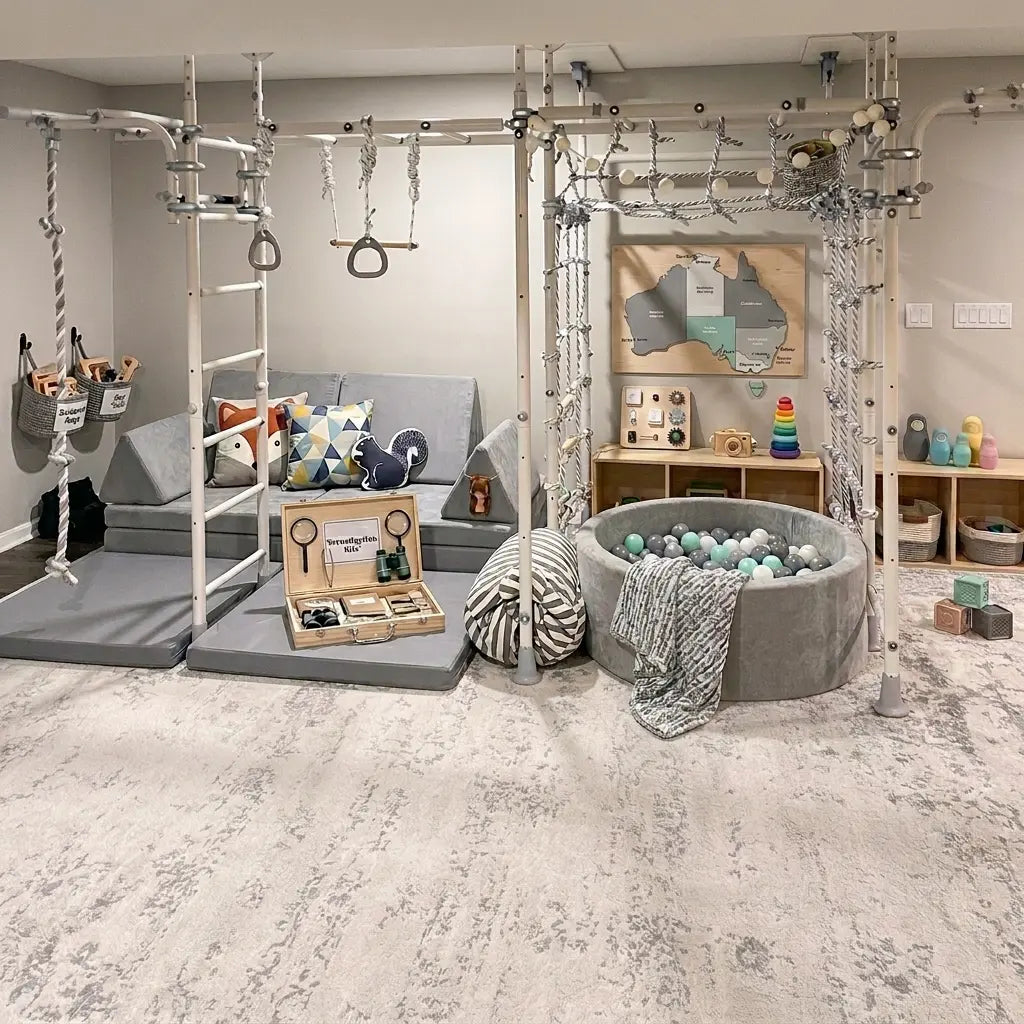
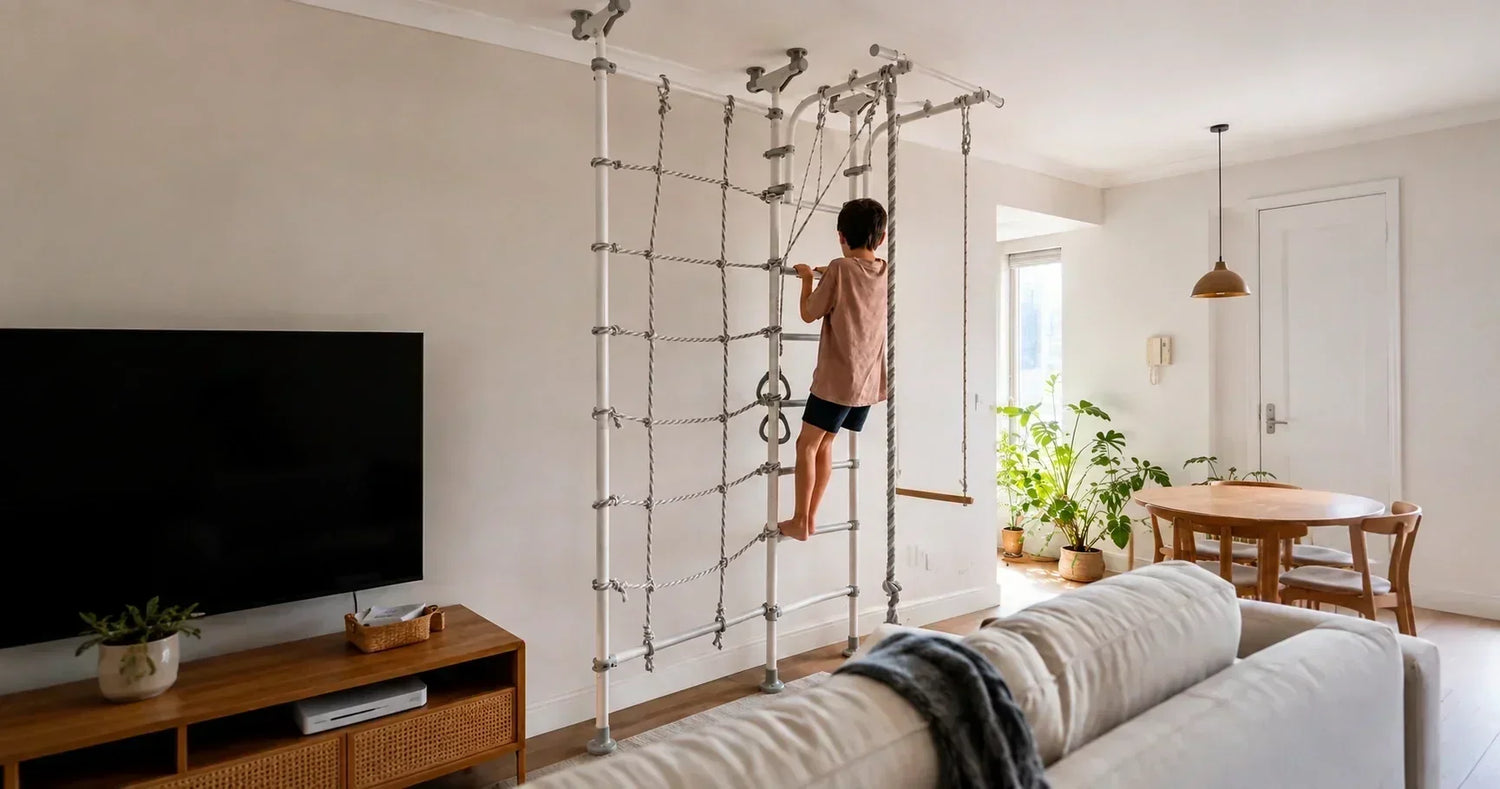
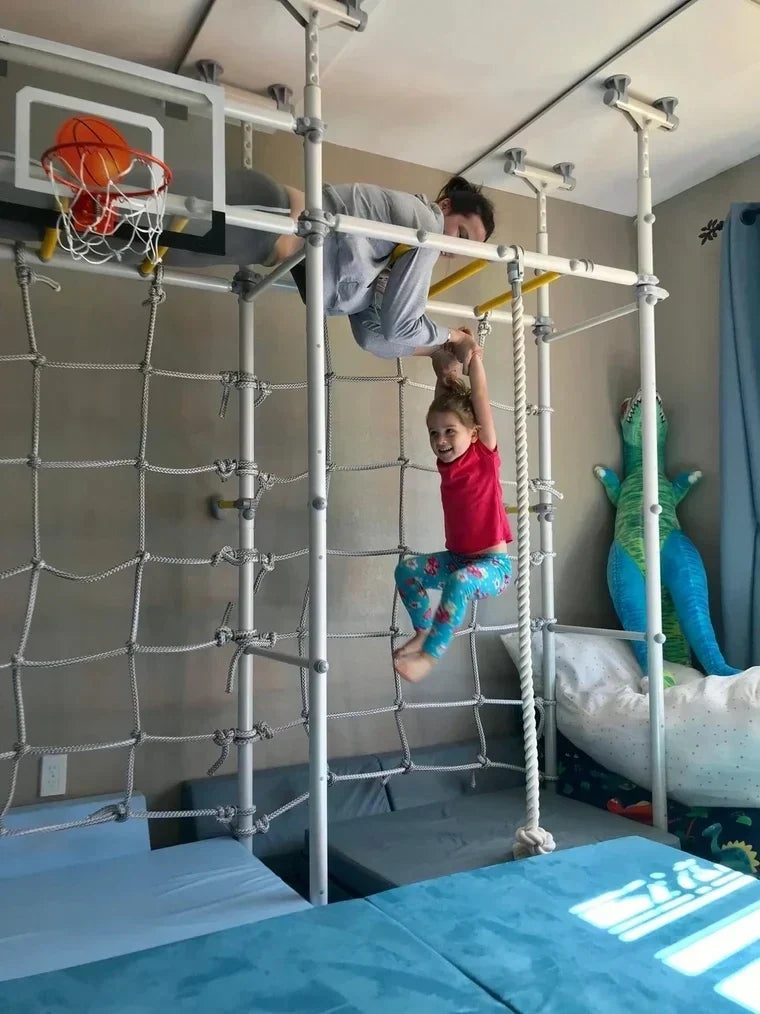
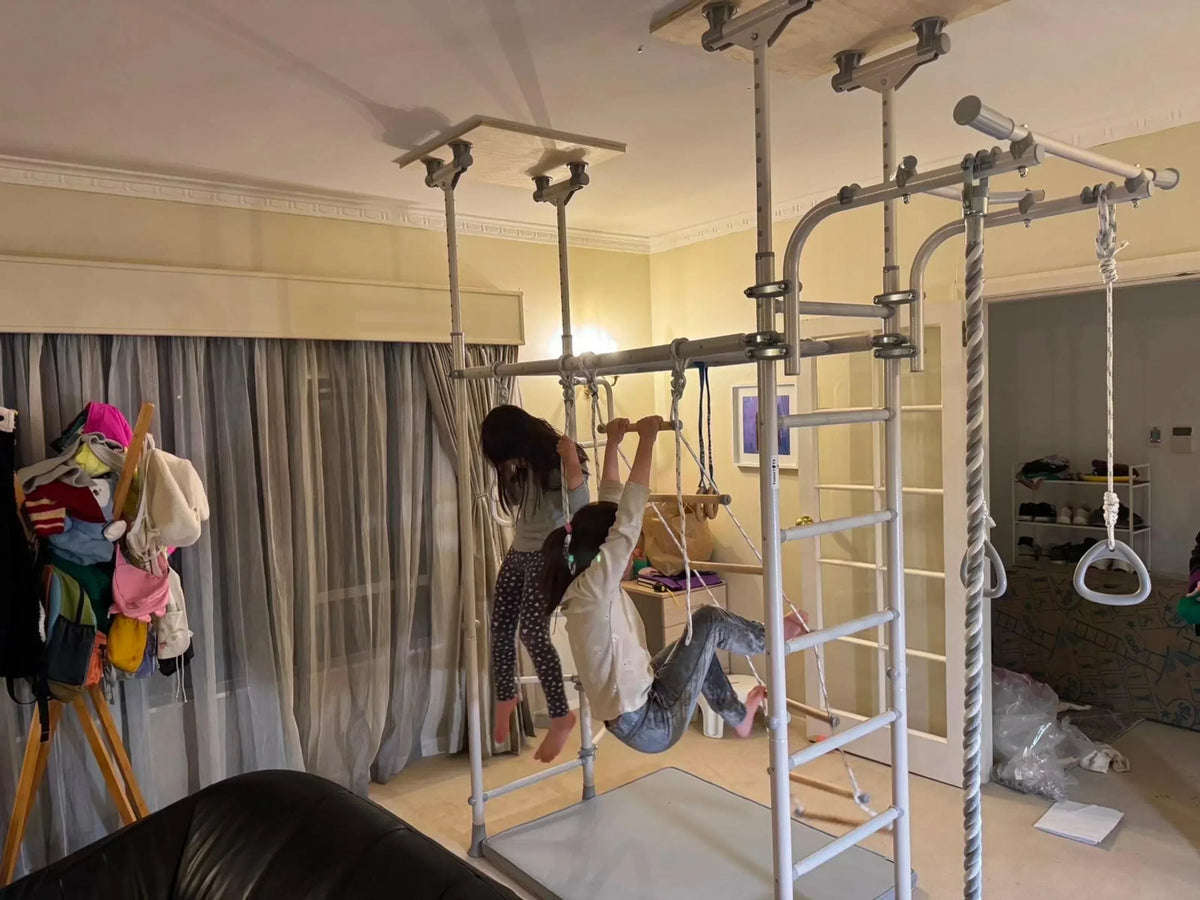
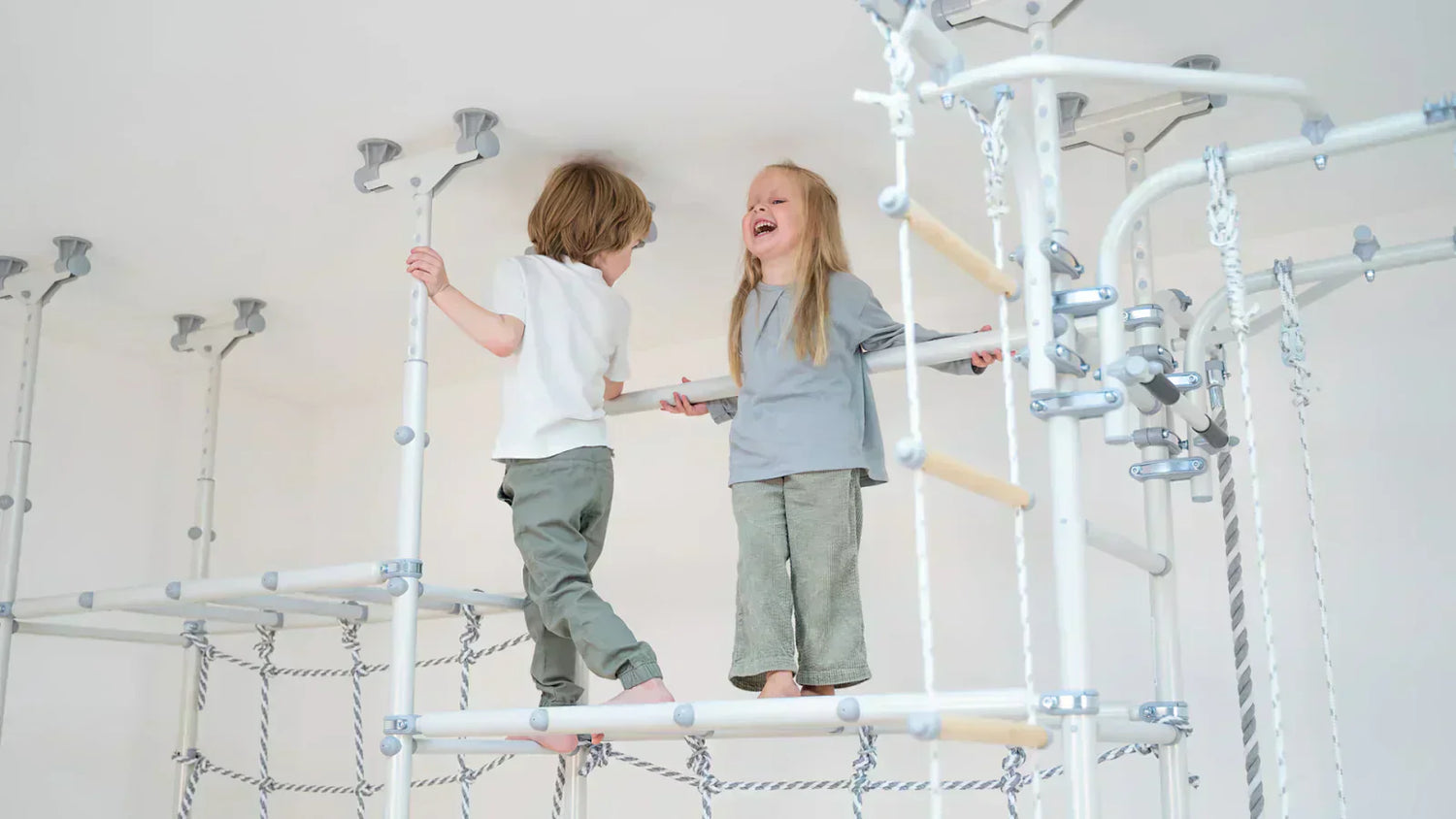
Indoor Monkey Bars & Swedish Climbing Frames
Australia's only no-drill tension-mounted indoor climbing frames. Provide vestibular and proprioceptive input supporting gross motor development, strength, coordination and confidence. European-made. Perfect for apartments, rentals and therapy clinics.
• NDIS funding path: Capital Assistive Technology — higher-risk AT, OT risk assessment and recommendation required before purchase [2]
• Options: No-drill (tension-mounted) for apartments and rentals; wall-mounted for clinics
Montessori Wooden Puzzles & STEM Kits
Open-ended, screen-free toys supporting fine motor development, sensory exploration and problem-solving. ESNAF wooden puzzles (Bulgaria) and TOYI STEM kits (Turkey). Non-toxic, European-made.
• NDIS funding path: Core Consumables — must link to disability-related goals in your plan [1][2]
10. Tips for a successful NDIS sensory equipment claim in 2026
1. Get an OT recommendation before purchasing climbing equipment, higher-risk AT, or any item over $1,500. Documentation quality is under greater scrutiny in 2026. [2][7]
2. Check your plan's funding categories and active funding period. You need active Core Consumables or Capital AT budget. Ask your plan manager or LAC. [5][6]
3. Use your plan's exact goal language. If your plan mentions 'gross motor development', 'sensory regulation' or 'daily living independence', quote those phrases when justifying a purchase.
4. Request an itemised quote from Tinnitots — we provide invoices with product descriptions. Email support@tinnitots.com.au.
5. Keep all records. Self-managed participants must retain receipts, invoices and OT letters. Auditing has increased under the 2026 Integrity Act. [7]
6. Do not assume 'sensory' equals funded. The NDIS funds your child's specific functional need. Your OT's recommendation is the essential link between product and funding. [1][3]
7. If your plan review is approaching in late 2026 or 2027, ask your support coordinator how the I-CAN v6 assessment will affect your AT requests. [8][12]
11. Frequently asked questions
Does NDIS cover sensory toys in 2026?
Yes — the NDIS can fund sensory equipment in 2026 when it is directly tied to the participant's disability, meets the 'reasonable and necessary' criteria under Section 34 of the NDIS Act, and links to goals in the participant's NDIS plan. [1][3] The April 2026 Integrity and Safeguarding Act targeted fraud and provider compliance — it did not change the core funding rules for sensory AT or Consumables. [7]
What changed in NDIS laws in 2026 for sensory equipment?
The April 2026 NDIS Amendment (Integrity and Safeguarding) Act introduced stronger Commission enforcement powers, civil penalties up to $82,500 for misleading product promotion, fully electronic claiming, and expanded whistleblower protections. [7] It did not change which sensory items can be funded. The most significant funding rule changes occurred in October 2024, when formal NDIS Supports and Exclusions lists were published for the first time. [5][6] Further changes come from April 2027 (I-CAN assessments) but do not alter AT or Consumables funding categories. [8]
Is the NDIS low-cost AT threshold still $1,500 in 2026?
Yes. The threshold remains under $1,500 per item under the NDIS Pricing Arrangements and Price Limits 2025-26 (effective 24 November 2025). [2][4] No formal NDIA quote is required for items under $15,000, but written therapist evidence is needed for mid-cost AT. Higher-risk items such as climbing frames and sensory swings require an OT risk assessment regardless of price. [2]
Can I buy MUFFIK sensory mats with NDIS funding?
Yes. MUFFIK orthopaedic sensory floor mats from Tinnitots can be claimed through Core Supports (Consumables) as low-cost AT for self-managed and plan-managed participants, when linked to disability-related goals such as sensory regulation, proprioception or balance. [1][2] Contact Tinnitots for an itemised NDIS quote.
Can I use NDIS to buy an indoor climbing frame?
Indoor climbing frames for sensory and gross motor development may be funded through the Assistive Technology budget (Capital Supports), but they are classified as higher-risk AT — an OT risk assessment and written recommendation is required before purchase. [2] Tinnitots' no-drill indoor monkey bars are used in OT-recommended therapy plans across Australia. Email support@tinnitots.com.au.
What are NDIS funding periods and how do they affect sensory equipment purchases?
From 19 May 2025, all new and reassessed plans include funding periods — set timeframes in which specific funding components are available. [5][6] Before purchasing sensory equipment, confirm with your plan manager that the relevant funding period (Core Consumables or Capital AT) is currently active.
What is the difference between self-managed, plan-managed and agency-managed for buying sensory equipment?
Self-managed: buy from any provider, pay upfront, claim via myplace portal with provider ABN. Plan-managed: any provider, plan manager pays from NDIS budget. Agency-managed: registered NDIS providers only, NDIA pays directly. [40] Tinnitots supports self-managed and plan-managed participants.
|
🛒 Ready to order? Tinnitots supports NDIS participants across Australia |
|
Itemised NDIS quotes • OT-recommended products • Fast shipping Australia-wide |
|
Melbourne • Sydney • Brisbane • Perth • Adelaide • Regional Australia |
|
Our most-requested NDIS products: |
|
• MUFFIK Sensory Tactile Floor Mats (Core Consumables / Low-cost AT) |
|
• Indoor Monkey Bars & Swedish Climbing Frames (Capital AT — OT required) |
|
• STEM & Montessori Wooden Toys (Core Consumables) |
|
www.tinnitots.com.au | support@tinnitots.com.au | Afterpay available |
Sources — verified May 2026
All factual claims in this article are sourced to the references below. Reference numbers in square brackets appear throughout the article.
OFFICIAL NDIS & GOVERNMENT SOURCES
[1] ndis.gov.au — Supports funded by the NDIS https://www.ndis.gov.au/understanding/supports-funded-ndis
[2] ndis.gov.au — Assistive Technology Explained (updated April 2026) https://www.ndis.gov.au/participants/assistive-technology-explained
[3] ndis.gov.au — Reasonable and Necessary Supports https://www.ndis.gov.au/understanding/supports-funded-ndis/reasonable-and-necessary-supports
[4] ndis.gov.au — Pricing Arrangements and Price Limits 2025-26 (Version 1.1, effective 24 November 2025) https://www.ndis.gov.au/providers/pricing-arrangements
[5] ndis.gov.au — Summary of Legislation Changes (current as of 3 May 2026) https://www.ndis.gov.au/new-way-of-planning/changes-ndis-legislation/summary-legislation-changes
[6] Department of Health, Disability and Ageing — Amendments to the NDIS Act https://www.health.gov.au/our-work/ndis-legislation-changes/amendments
[7] Department of Health, Disability and Ageing — NDIS Amendment (Integrity and Safeguarding) Act 2026 (Royal Assent 8 April 2026) https://www.health.gov.au/our-work/ndis-legislation-changes/amendments/2025
[8] Department of Health, Disability and Ageing — Securing the NDIS for Future Generations (May 2026) https://www.health.gov.au/securingtheNDIS
[19] ndis.gov.au — Guide to NDIS Support Budgets https://www.ndis.gov.au/participants/using-your-funding/ndis-support-budgets/guide-ndis-support-budgets
[20] ndis.gov.au — Frequently Asked Questions about Legislation https://www.ndis.gov.au/about-us/improving-ndis/changes-ndis-legislation/frequently-asked-questions-about-legislation
NDIS LEGISLATION
[40] National Disability Insurance Scheme Act 2013 (NDIS Act), Section 34 — Reasonable and Necessary criteria https://www.legislation.gov.au/Details/C2024C00150
[41] NDIS Amendment (Getting the NDIS Back on Track No.1) Act 2024 — commenced 3 October 2024 https://www.legislation.gov.au
[42] NDIS Amendment (Integrity and Safeguarding) Act 2026 — Royal Assent 8 April 2026 https://www.aph.gov.au/Parliamentary_Business/Bills_Legislation/Bills_Search_Results/Result?bId=s1478
PROFESSIONAL & PROVIDER ANALYSIS
[9] The Sensory Specialist — The 2026 Guide to NDIS Assistive Technology and Consumables Claims (January 2026) https://www.thesensoryspecialist.com.au/blogs/blog/the-2026-guide-to-ndis-assistive-technology-consumables-claims
[10] Lexology / MinterEllison — NDIS Supports Lists Released (October 2024) https://www.lexology.com/library/detail.aspx?g=0b8f440d-1a69-42e6-b235-00b985451c4b
[11] Wonder Kids OT — NDIS Assistive Technology Guide 2026 (February 2026) https://wonderkidsot.com.au/ndis-assistive-technology-guide/
[12] ICANReady — NDIS 2026 Changes Explained https://www.icanready.com/blog/ndis-2026-changes-explained
[13] Affective Care — New NDIS Changes 2026: Planning, I-CAN, Pricing and Provider Rules (May 2026) https://affectivecare.com.au/new-ndis-changes-2026/
[14] MinterEllison — NDIS Reforms 2026: What Providers Need to Know (April 2026) https://www.minterellison.com/articles/ndis-legislative-amendments
[15] Team DSC — What You Need to Know About the NDIS Integrity and Safeguarding Bill 2026 https://teamdsc.com.au/resources/what-you-need-to-know-about-the-ndis-amendment-integrity-and-safeguarding-bill-2026/
[16] Nurse Aid Australia — NDIS Consumables Guide 2026 (February 2026) https://nurseaidaustralia.com.au/ndis-consumables-guide-2026-funded-vs-not-funded/
[17] Carers Network Australia — What the New NDIS Changes Mean for You (May 2026) https://carersnetwork.com.au/what-the-new-ndis-changes-mean-for-you/
[18] Better Care Delivered — NDIS Changes Announced (May 2026) https://www.bcd.org.au/news/ndis-changes-2026
[43] The Junction Works — NDIS 2026 Updates and Tips (April 2026) https://www.thejunctionworks.org/2026-ndis-updates-and-tips-to-cope-with-change/
[44] Perth Best Physio — NDIS Changes 2026 Explained (May 2026) https://rasmobilephysioperth.com.au/ndis-changes-2026-explained/
Disclaimer: This article reflects NDIS legislation and policy as of May 2026. NDIS funding decisions are based on individual participant plans, goals and functional needs. This article does not constitute financial, legal or clinical advice. Always confirm eligibility with your plan manager, LAC or occupational therapist before purchasing. Tinnitots is not a registered NDIS plan manager. Check ndis.gov.au for the most current information. This is only a guide and should not be treated as a legally binding document.
0 comments