
Quick answer
Paediatric occupational therapy waits in Australia can run well over a year in some states, and even longer for a formal diagnosis. While you wait, you can safely set up general sensory and movement activities at home — climbing, swinging, deep-pressure play — using the same broad categories OTs draw on. This isn't a substitute for a professional assessment, but it doesn't have to be nothing either.
If you're on a waitlist right now, you already know the number that matters most isn't a statistic — it's how many more months of "just wait and see" you're being asked to sit through. But the statistics do explain why the wait feels the way it does, and they're worth knowing.
Why the wait is so long right now
Quick answer: Median paediatric waits in parts of Australia now exceed 18 months, and regional occupational therapy access adds further delay on top of that.
In Western Australia, the median wait to see a paediatrician through the Child Development Service reached 23.9 months as of March 2026 — up from 18.7 months in October 2025, and more than double the 16.4-month median recorded back in 2022. For families accessing services regionally through WA Country Health Service, occupational therapy waits have averaged close to three months on top of whatever the paediatric wait already was. (Source: WA Parliament, Leader of the Opposition, May 2026)
This isn't unique to one state, and it isn't a sign that something has gone wrong with your referral. Nationally, NDIS participant numbers passed 650,000 in 2026, and Occupational Therapy Australia — the professional body representing more than 30,000 registered OTs nationally — has flagged ongoing pressure on service capacity amid funding and workforce constraints. Waitlists are a system-capacity problem, not a reflection of how urgent your child's needs are.
Why waiting for the "right" time isn't the best strategy
Quick answer: Early childhood support in Australia is deliberately front-loaded because early developmental windows matter — which is exactly why doing nothing during a wait isn't the ideal default.
The NDIS Early Childhood Approach specifically targets children under 9, with an access decision target of 21 days for this pathway — a design choice that reflects the broader view, shared across paediatric and allied health policy, that earlier support during key developmental windows tends to produce better long-term outcomes. According to Raising Children Network — Australia's government-backed, NHMRC-funded parenting resource — sensory processing difficulties affect up to 1 in 6 children and are more common among autistic children and those with neurodevelopmental conditions. That's a program design fact and a population statistic, not a promise about any individual child's results — but it's part of why "we'll just wait until the appointment" isn't the advice most professionals would give if asked directly.
What OTs actually use — in plain language
Quick answer: Climbing and hanging, deep pressure, swinging, and fine-motor play are the four broad categories most commonly referenced in occupational therapy practice.
You don't need clinical training to understand the building blocks OTs work with. Broadly, these fall into a few categories:
- Proprioceptive & vestibular input — climbing, hanging, and swinging activities that give a child feedback about where their body is in space. Play Australia, the national peak body for children's play, notes that climbing and crawling on play equipment helps develop proprioceptive ability and strengthens muscles and joints, while swinging and rolling stimulate the vestibular system. Some Occupational therapy practices themselves describe trampolines as a go-to tool precisely because they deliver this kind of input in a simple, repeatable way.
- Deep pressure — weighted tools (blankets, lap pads) used to support regulation and calm. Clinical guidance typically caps a weighted blanket at around 10% of body weight.
- Movement & rocking — swings, rocking equipment, and balance activities that support vestibular regulation.
- Fine motor & tactile — textured materials, grip and hand-strength activities.
None of this is a diagnosis-specific protocol — it's the general toolkit, and it's why so much of this equipment shows up in OT clinics, schools, and homes alike, regardless of a child's specific profile. Victoria's Better Health Channel similarly notes that climbing, swinging, and exploring in play environments are core to healthy child development, provided they're set up with appropriate supervision and safety precautions.
Setting up a home space without a formal assessment
Quick answer: A simple, low-risk home setup usually combines one climbing/hanging element, one deep-pressure item, and a defined "landing" space — no drilling or permanent installation required for renters and apartment dwellers.
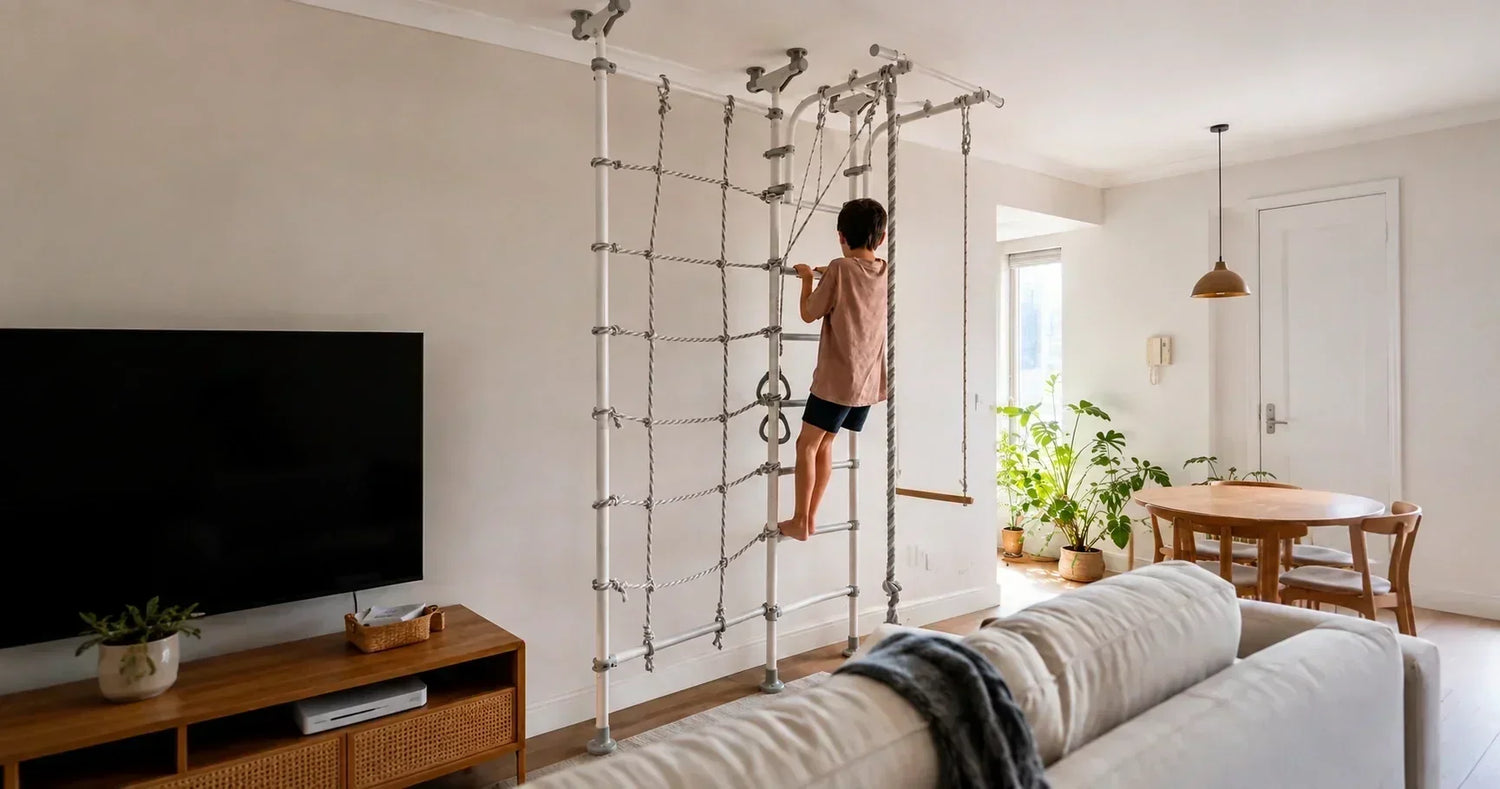
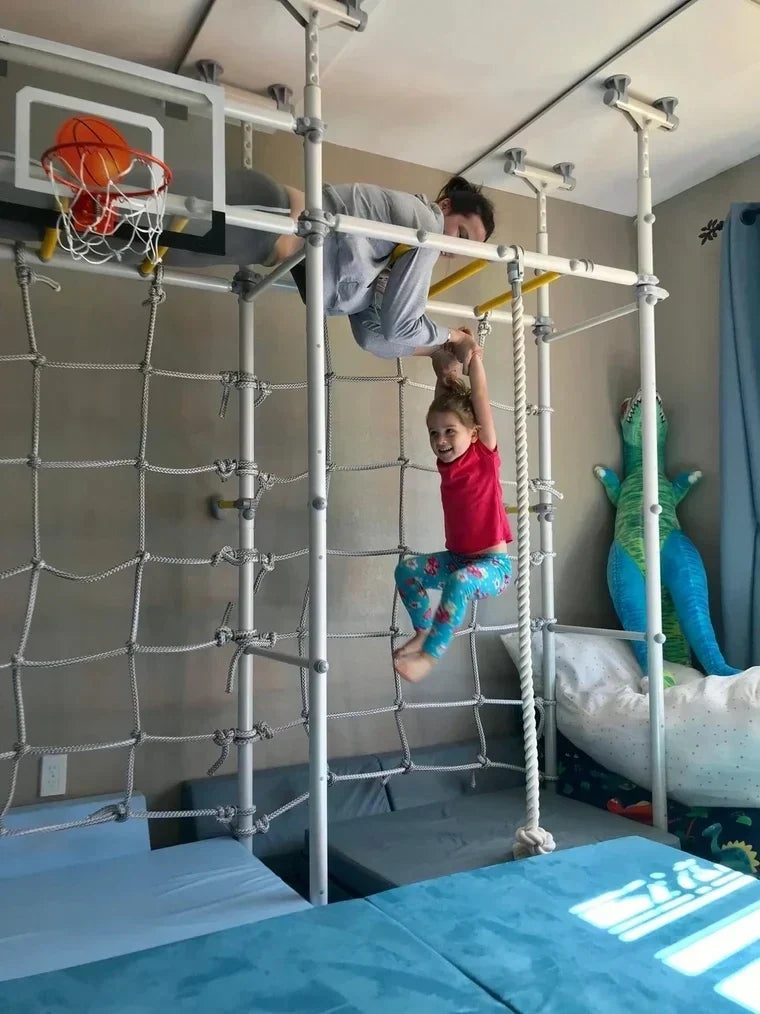
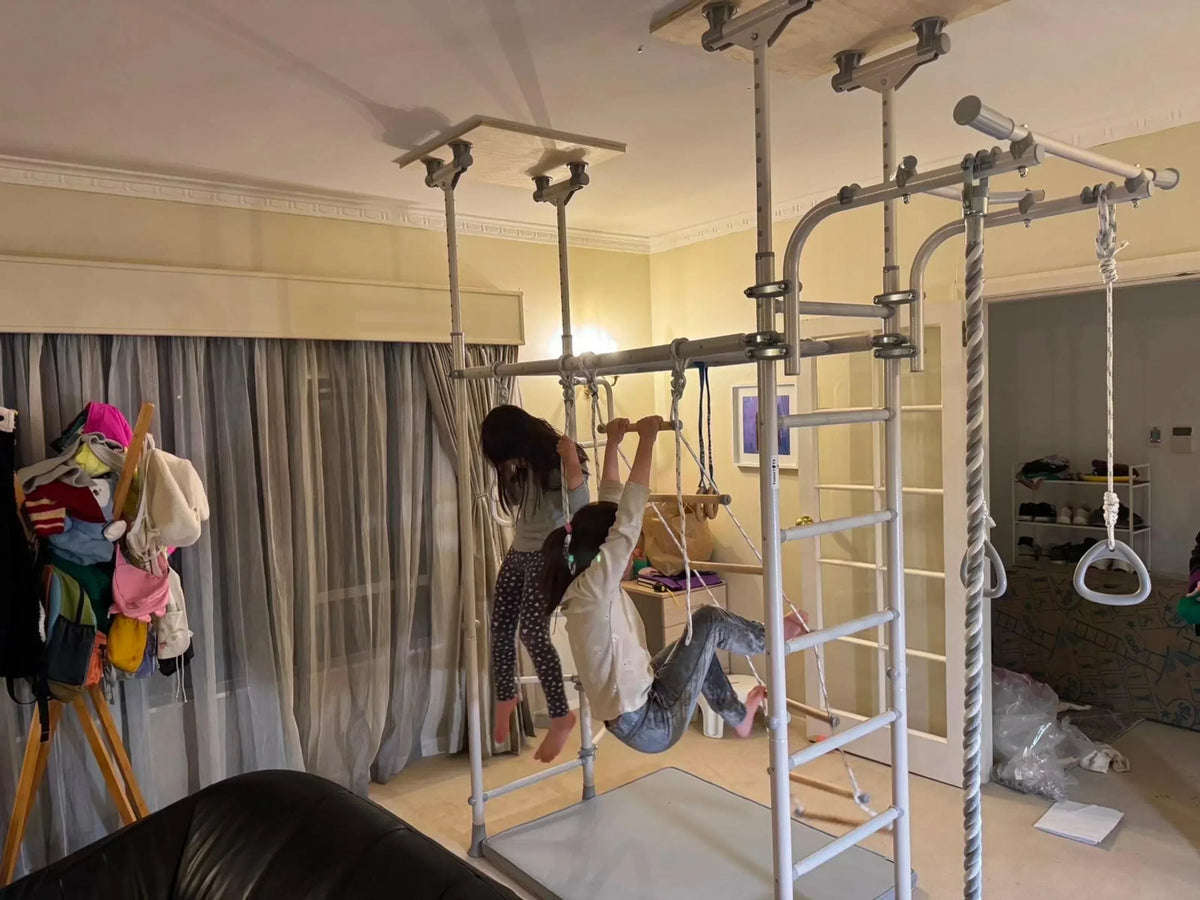
You don't need a dedicated room or a backyard to put this into practice. For the growing number of Australian families in apartments and rentals, a no-drill, tension-mounted climbing frame or indoor monkey bar setup gives you the climbing/hanging category without needing wall fixtures, ground anchoring, or landlord approval. Pair it with a crash mat underneath and a simple weighted or textured item nearby, and you've covered three of the four categories above in a single corner of a room.
A few practical basics worth keeping in mind regardless of what you set up:
- Always supervise active play — this applies to any climbing or swinging equipment, professionally recommended or otherwise.
- Check weight capacity and installation instructions before first use, and re-check fixings periodically as equipment gets regular use.
- Introduce one new element at a time rather than a full sensory room all at once — it's easier to see what your child actually responds to.
What needs a professional — and what doesn't
Quick answer: Whether NDIS-funded equipment needs professional sign-off generally comes down to cost and complexity, not the type of product.
This is one of the more genuinely confusing parts of the process, and it's worth being direct about it: the NDIS support lists don't specifically call out sensory equipment by name, which is exactly why so many families end up unsure whether something like a climbing frame counts as "high-risk" assistive technology. In general, items that don't require custom modification or specialist setup and fall under the current low-cost assistive technology threshold (generally around $1,500 as of publication — this has been subject to change during the 2026 NDIS reforms, so confirm the current figure at ndis.gov.au) are treated as low-cost assistive technology, which can usually be self-purchased without prior approval — while more complex or higher-cost items do need advice from an assistive technology advisor.
We've written a dedicated, more detailed breakdown of how this applies specifically to indoor climbing equipment and monkey bars on our NDIS guide — worth reading in full if this is the part holding you up, rather than repeating the whole argument here.
Frequently asked questions
How long is the occupational therapy waitlist in Australia?
It varies significantly by state and region. In Western Australia, the median wait to see a paediatrician reached 23.9 months as of March 2026, up from 18.7 months in October 2025, with regional OT access adding roughly three further months. Public system waits are typically longer than private.
Can I do sensory activities with my child without an OT?
Yes — general sensory and movement play (climbing, swinging, deep pressure) is appropriate for most children to explore at home under normal supervision. It complements, but doesn't replace, a professional assessment.
Is a home climbing frame considered high-risk NDIS equipment?
Generally not, if it falls under the current low-cost assistive technology threshold and doesn't require specialist setup. That threshold has generally sat around $1,500 but has been subject to change during the 2026 NDIS reforms — confirm the current figure and your specific plan details at ndis.gov.au or with your plan manager before purchasing.
Why are children under 9 prioritised for early intervention?
The NDIS Early Childhood Approach is designed around the view that support during key early developmental windows tends to produce better long-term outcomes, which is why this pathway targets a faster access decision for younger children.
What indoor equipment do occupational therapists commonly recommend?
Broadly: climbing and hanging equipment for proprioceptive/vestibular input, weighted tools for deep pressure, swings for movement regulation, and tactile or fine-motor tools. Individual recommendations should come from a professional assessment.
Setting up a no-drill, apartment-safe climbing space at home?
Our indoor monkey bars and climbing frames install with zero drilling and zero wall damage — built for renters, apartments, and everyday family homes across Australia.
Explore Tinnitots Indoor Monkey Bars →
0 comments