
Last updated: 31 October 2026.
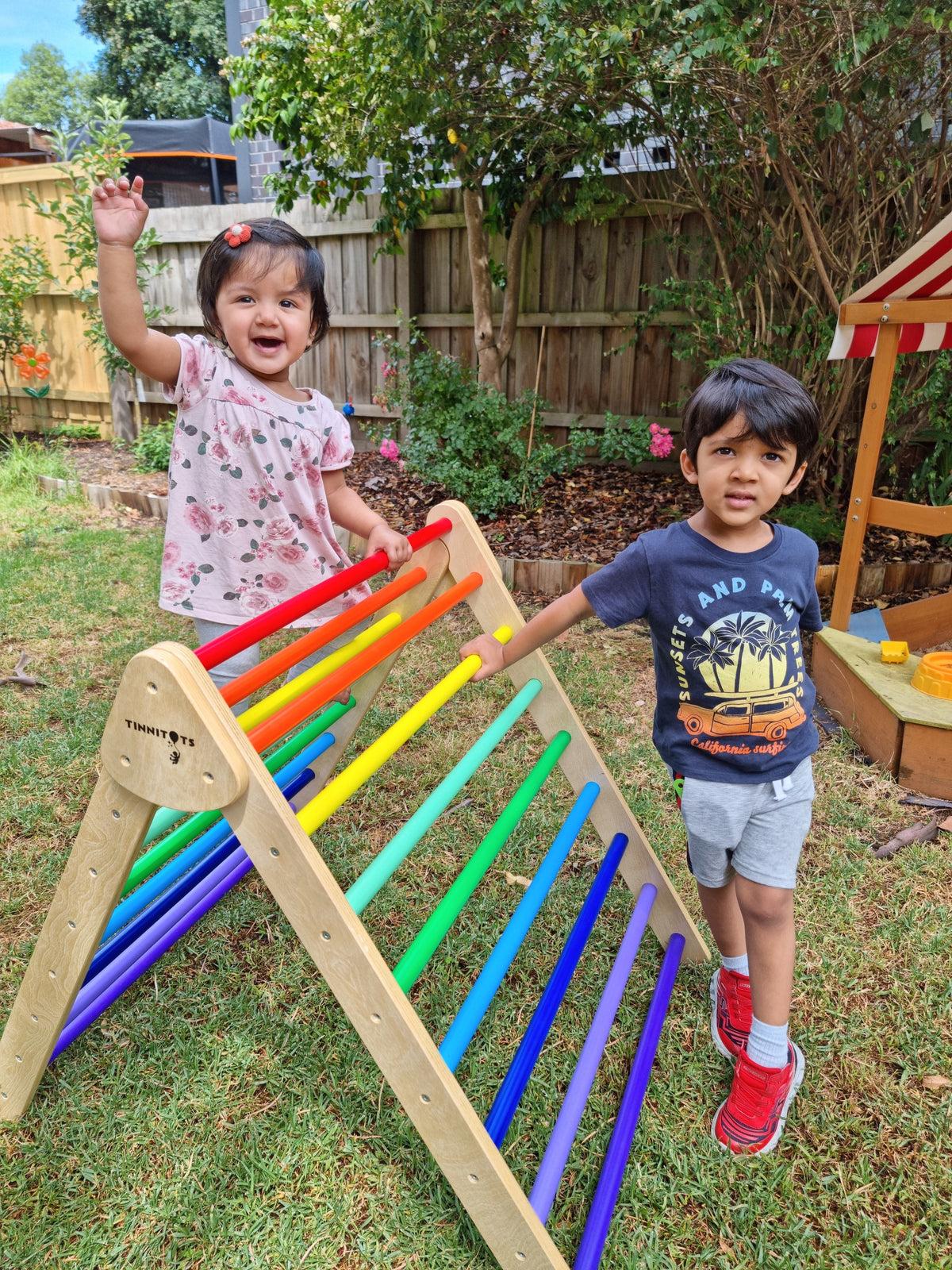
Quick answer: Toddlers climb because they are building strength, balance and confidence, so the goal is to redirect the climbing, not stop it. Anchor drawers, bookcases and TVs to the wall, then give them a low, stable place to climb on a soft surface. Tinnitots, an Australian-owned store in Melbourne, stocks a Pikler triangle suitable from 7 months.
Why is my toddler climbing everything?
Climbing is a normal part of toddler development. Raising Children Network notes that between 18 and 24 months your toddler will probably walk up and down stairs or climb furniture with your help, and that it is a good idea to look at how you can make your home safe for an active toddler to move around in.
Movement play matters too. Raising Children Network explains that daily play helps toddlers strengthen their muscles and bones and builds confidence as they discover what their bodies can do. Australia's 24-Hour Movement Guidelines for the Early Years recommend that toddlers aged 1 to 2 spend at least 180 minutes a day in a variety of physical activities, including energetic play, spread throughout the day.
Is furniture climbing actually dangerous?
Yes, and tip-overs are the biggest risk. The Royal Children's Hospital Melbourne says more than half of tip-over injuries involve a child under 4, that about two children die each year in Australia from toppling furniture and televisions, and that with a little effort these incidents can be prevented.
The ACCC reports that more than 900 Australians a year need medical help for toppling furniture injuries, with children up to age 4 most at risk. Since 2000, 28 people have died in Australia from toppling furniture, including 17 children under five. A national information standard now requires suppliers to attach warning labels and include anchoring advice for chests of drawers, wardrobes, bookcases and similar furniture 686 mm or taller, plus entertainment units of any height.
Falls are the other risk. A Kidsafe Victoria factsheet for children aged 1½ to 3½ lists falls from play equipment and furniture as a common cause of injury and advises that the fall height from play equipment should be less than 1.5 metres.
What can I do at home today (for free)?
Start with the house, not the shopping cart. These steps cost little or nothing and they matter more than any product.
Make the furniture safe to be near
- Anchor tall or unstable furniture and TVs to wall studs or the floor with brackets, braces or straps, following the manufacturer's directions (RCH). If your furniture came without anchors, the ACCC suggests asking a hardware store or furniture retailer for them.
- Put heavy things down low. Store heavy items on the lowest shelves and drawers.
- Take the bait off the top. Toys, snacks and remotes on top of a dresser are an invitation to climb.
- Do not put a TV on a chest of drawers or furniture not designed to hold it.
- Fit drawer locks, as open drawers make a ready-made staircase.
Give the climbing somewhere to go
- Say what they can climb, not just what they can't. "Couch is for sitting. You can climb the cushions on the floor."
- Build a floor-level obstacle course from couch cushions, pillows and a low, sturdy step, so the fall height stays close to the ground.
- Head outdoors when you can. Playground equipment, hills, sand and rocks are all suggested by Raising Children Network as ways for toddlers to test their bodies.
- Supervise and stay close. Small bumps are part of learning, but an adult within reach turns a fall into a lesson rather than an injury.
What is safe for a toddler to climb indoors?
A safe indoor climber for a toddler is low, stable, made for a child's weight, and sits on a soft but sturdy surface. Here is how common options compare.
| Option | Good for | Watch out for | Cost |
|---|---|---|---|
| Couch cushions on the floor | Crawling, stepping, rolling | Gaps between cushions; nearby hard edges | Free |
| Local playground | Ladders, slides, varied surfaces | Equipment sized for older kids; heat and sun | Free |
| Wooden Pikler Triangle | First climbing from 7 months; folds away | Use on a soft but sturdy surface, not hard floors; max 50 kg | $274.55 |
| Wooden 2 in 1 Climber Slider | Climbing board one side, slide the other; 7 months to 5 years | Needs supervision and a soft surface; max 50 kg | $160.00 |
| Sensory Swedish Climbing Frame (No Drill) | Children 3 years and older ready for ladders, rope and rings | Not for under-3s; needs a 2.29 m to 2.8 m ceiling and landing mats | $649.00 |
How Tinnitots can help
Tinnitots is an Australian-owned store based in Greensborough, Melbourne. Every product below was in stock when this post was written, and the specs are copied from the product pages.
For babies and toddlers: Wooden Pikler Triangle ($274.55)

The Wooden Pikler Triangle is a foldable birch wood climbing frame recommended for 7 months and up, always with parental supervision. It measures 91 cm (L) x 70 cm (W) x 78 cm (H), has 17 rods with grip pads and takes up to 50 kg. It gives a toddler a place built for climbing, so the bookcase stops being the most exciting thing in the room. Read more in our guide to the benefits of the Pikler climbing frame.
Add a slope: Wooden 2 in 1 Climber Slider ($160.00)

The Wooden 2 in 1 Climber Slider is a reversible birch board (100 cm x 35 cm x 2 cm) with a slide on one side and seven climbing holds on the other. It is recommended for 7 months to 5 years with parental supervision, supports up to 50 kg and pairs with the Pikler Triangle.
For 3 years and up: Sensory Swedish Climbing Frame, No Drill ($649.00)

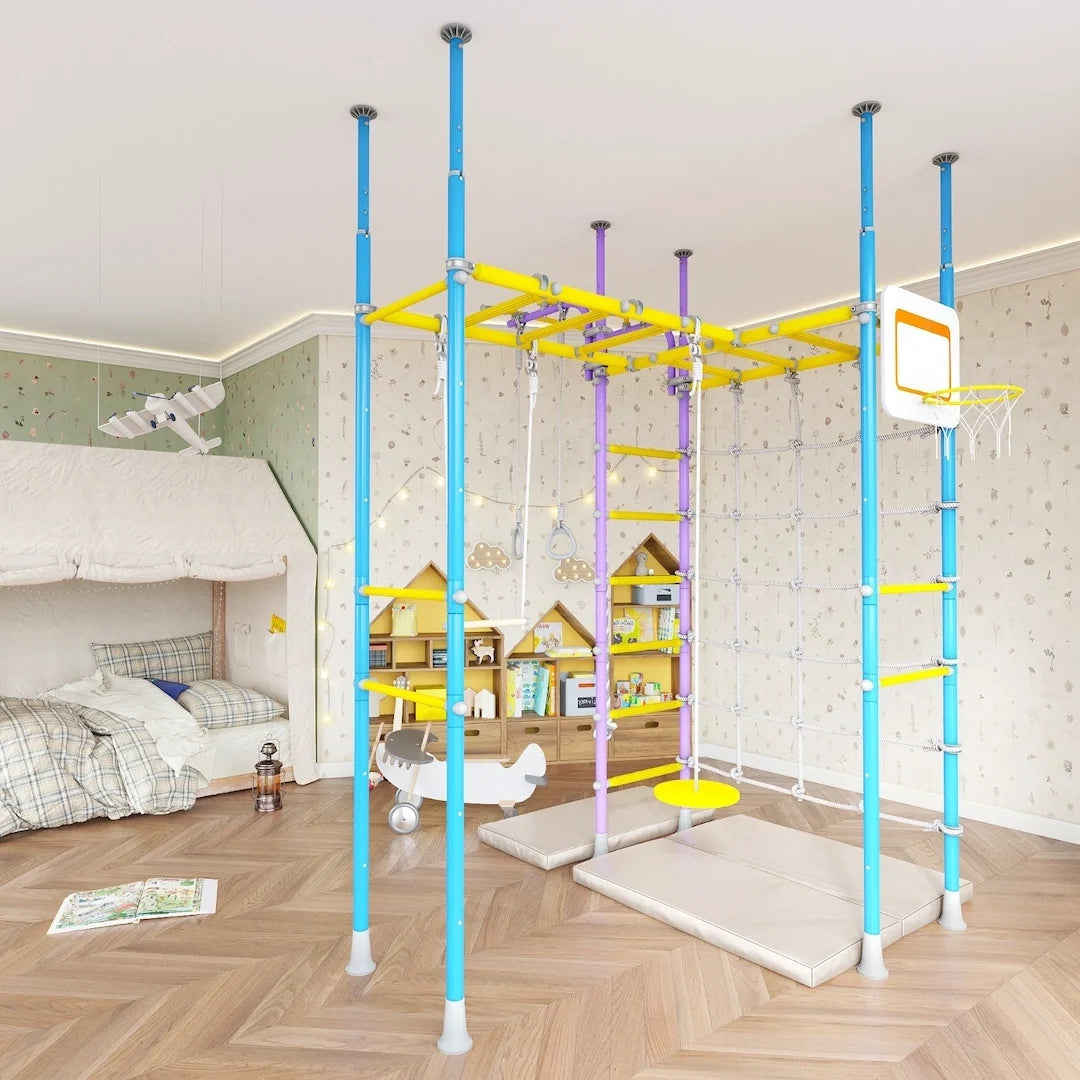
Once your child turns 3, the Sensory Swedish Climbing Frame gives bigger climbers more challenge. It is tension-mounted floor to ceiling (no drilling), fits ceilings from 2.29 m to 2.8 m, measures 86 cm W x 76 cm D, and includes a rope climber, gymnastics rings and a trapeze bar. It is built to European safety standards, with a 200 kg frame load and a 36-month frame warranty; accessories take up to 50 kg. It is recommended for children aged 3 years and older with active adult supervision. Renting? See our no-drill guide for renters and apartments.
Soften the landing: Super Soft Foldable Landing Play Mats (from $149.00)

The Super Soft Foldable Landing Play Mats come in 100 x 100 x 6 cm ($149.00) and 100 x 100 x 10 cm ($189.00). They have a shock-absorbing foam interior and a wipe-clean vinyl cover, and fold away when not in use. The product page recommends them for children aged 3 years and above with supervision, so they suit the climbing frame. For under-3s on a Pikler triangle, use a soft but sturdy surface such as a firm rug.
Barefoot balance: Muffik sensory playmats ($22.95 each)

For children 3 years and above, Muffik sensory playmats like the Pebbles Sensory Playmat ($22.95 per 29.79 cm tile) interlock into a textured path for walking, hopping and balancing. They add a different kind of movement challenge to an obstacle course.
Browse all of our Montessori wooden play gyms or the full indoor monkey bars range.
Heatwave on the way? Our guide to indoor active play when it is too hot to play outside has free ideas for keeping kids moving on heat days.
When should I talk to a professional?
A climbing toddler is usually a healthy one. Raising Children Network suggests seeing your child and family health nurse (in Victoria, your Maternal and Child Health nurse) or GP if at 2 years your child can't walk up and down stairs even holding on, can't run, or is losing skills they had before. Talk to them too if your child seems to have no sense of danger at all, or you are worried about their movement or coordination. An occupational therapist can also help. If you are waiting for one, our guide On the OT waitlist? What you can do at home right now may help.
Frequently asked questions
Why does my toddler climb on everything?
Climbing is a normal part of toddler development. Raising Children Network says toddlers at 18 to 24 months will probably climb furniture with help. Movement play builds muscles, bones and confidence, so redirect climbing to safe places rather than trying to stop it.
How do I stop my toddler climbing the furniture?
Anchor the furniture first, then offer something they are allowed to climb. Secure drawers, bookcases and TVs to the wall, keep tempting items off furniture tops, fit drawer locks, and give a clear alternative such as floor cushions or a Pikler triangle.
What age can a toddler use a Pikler triangle?
The Tinnitots Wooden Pikler Triangle is recommended from 7 months and up, always with parental supervision. It takes up to 50 kg and should be used on a soft but sturdy surface, not concrete or hard flooring.
Is a Pikler triangle or a no-drill climbing frame better for a 2-year-old?
For a 2-year-old, the Pikler triangle is the better fit. The Tinnitots Sensory Swedish Climbing Frame is recommended for children aged 3 and older, while the Wooden Pikler Triangle is recommended from 7 months.
Will the no-drill Swedish climbing frame fit a 2.7 m ceiling?
Yes, the Sensory Swedish Climbing Frame adjusts from 2.29 m to 2.8 m in height. A 2.7 m ceiling sits inside that range. It is tension-mounted, so it needs a solid floor and ceiling rather than wall drilling.
Do I need a mat under an indoor climber?
Yes, use a soft surface under any indoor climber. Tinnitots Super Soft Foldable Landing Play Mats start at $149.00 and are recommended for children aged 3 and above. For younger toddlers on a Pikler triangle, use a soft but sturdy surface.
What furniture should be anchored to the wall?
Anchor TVs and any tall or unstable furniture. Australia's toppling furniture information standard covers chests of drawers, wardrobes, bookcases, hall tables, display cabinets, buffets and sideboards 686 mm or taller, plus entertainment units of any height.
Who sells Pikler triangles in Australia?
Tinnitots, an Australian-owned store in Greensborough, Melbourne, sells the Wooden Pikler Triangle for $274.55. Orders dispatch on Tuesdays and Fridays, and orders placed before 11am AEST on those days ship the same day. Delivery is not available to PO Boxes.
Give your climber a safe place to climb. Start with the Wooden Pikler Triangle for toddlers, step up to the Sensory Swedish Climbing Frame from age 3, and browse our Montessori wooden play gyms. Code XMAS20 currently gives 20% off (Soft Magnetic Blocks excluded; exclusions and T&Cs apply). Ordering a gift? Check our Christmas gift guide for delivery cut-offs. Questions? Email support@tinnitots.com.au.
References
- Royal Children's Hospital Melbourne, Safety: Furniture tip-over prevention, https://rch.org.au/kidsinfo/fact_sheets/Furniture_tip-over_prevention
- ACCC, New laws to increase awareness of the dangers of toppling furniture (7 May 2024), https://www.accc.gov.au/media-release/new-laws-to-increase-awareness-of-the-dangers-of-toppling-furniture
- Kidsafe Victoria via Better Health Channel, 1½ to 3½ years: Inquisitive and invincible, https://www.betterhealth.vic.gov.au/sites/default/files/2021-03/2017-factsheet-18mths-3years.pdf
- Australian Government Department of Health, Australian 24-Hour Movement Guidelines for the Early Years (birth to 5 years), https://www.health.gov.au/sites/default/files/documents/2021/05/24-hour-movement-guidelines-birth-to-5-years-fact-sheet.pdf
- Raising Children Network, Toddler development at 18-24 months, https://raisingchildren.net.au/toddlers/development/development-tracker-1-3-years/18-24-months
- Raising Children Network, Why play is important for your toddler's motor skills development, https://raisingchildren.net.au/toddlers/play-learning/play-toddler-development/movement-play-toddlers


0 comments