
I'll never forget watching my neighbor's daughter Bianca attempt the monkey bars for weeks with her determined little face scrunched in concentration. Then one sunny afternoon, everything clicked. She swung from bar to bar with newfound confidence, and when she reached the end, her triumphant grin could have powered the entire playground. That moment perfectly captures why I'm passionate about helping children master this incredible skill.
Research reveals that monkey bars engage major muscle groups - arms, shoulders, back, biceps, and core - making them one of the most effective playground activities for developing upper body strength and coordination. Studies show children who regularly use monkey bars demonstrate significantly improved grip strength and hand-eye coordination compared to their peers.

We've created this comprehensive guide because we believe every child deserves to experience Bianca’s joy of accomplishment. Whether you're a parent cheering from the sidelines, a teacher planning playground activities, or an educator designing safe play spaces, we'll show you how proper technique and safety measures can help most children master monkey bars. With patience, practice, and the right approach, that moment of triumph is within every child's reach.
If you have questions like:
- How to build up strength for monkey bars?
- Why can’t my child do monkey bars?
- How to teach kids to do monkey bars?
- At what age should kids be able to do monkey bars?
We got all these answers.
Understanding Monkey Bar Readiness and Safety Fundamentals
Age-Appropriate Introduction Guidelines
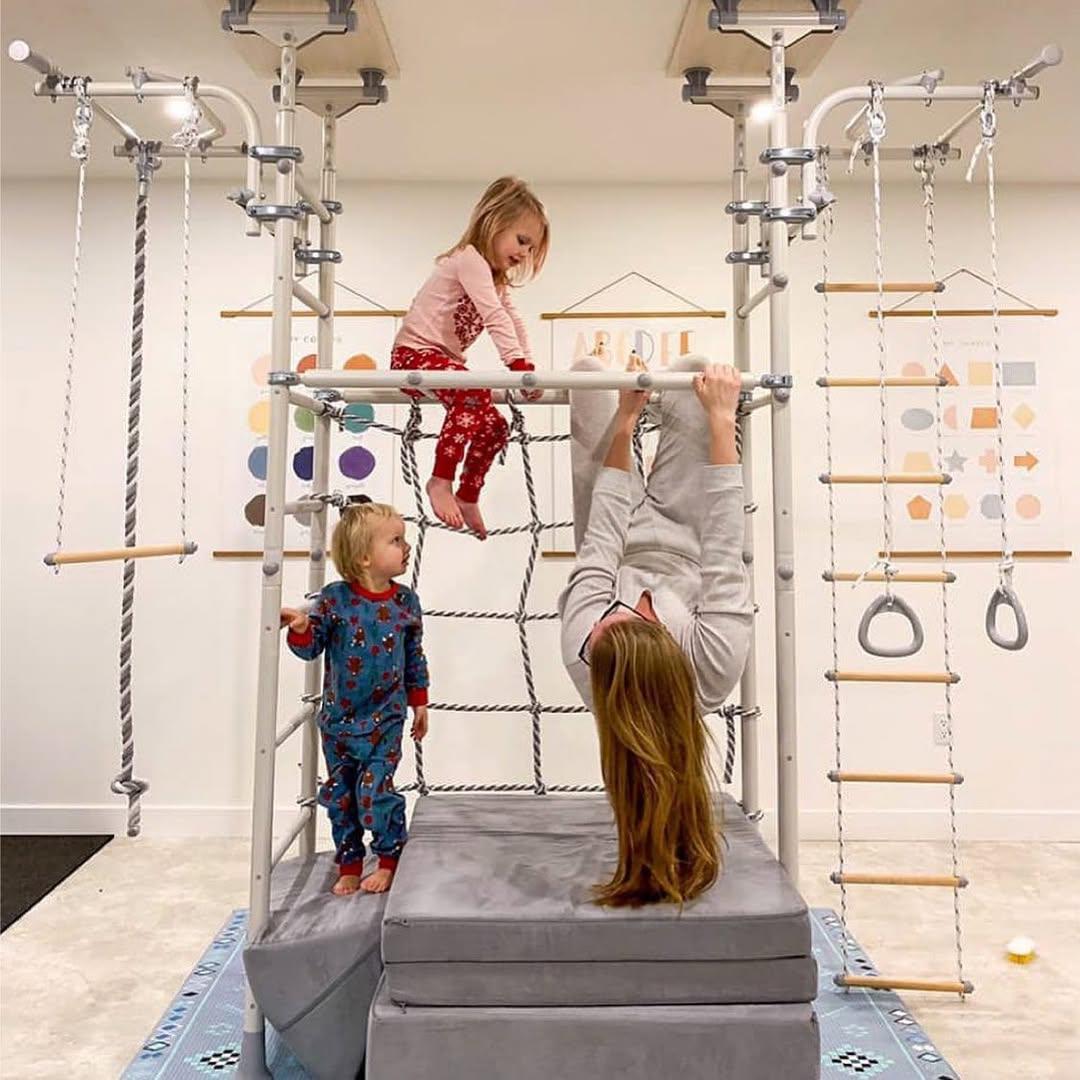
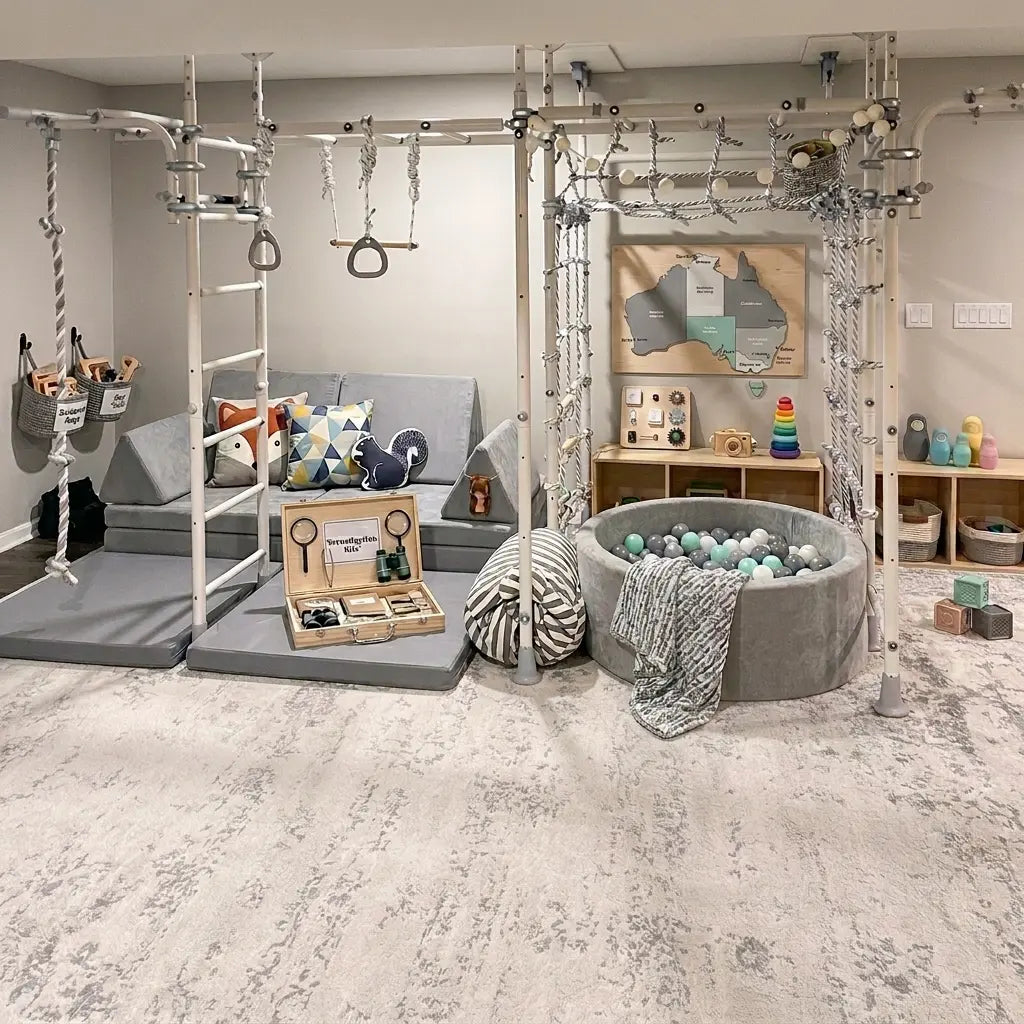
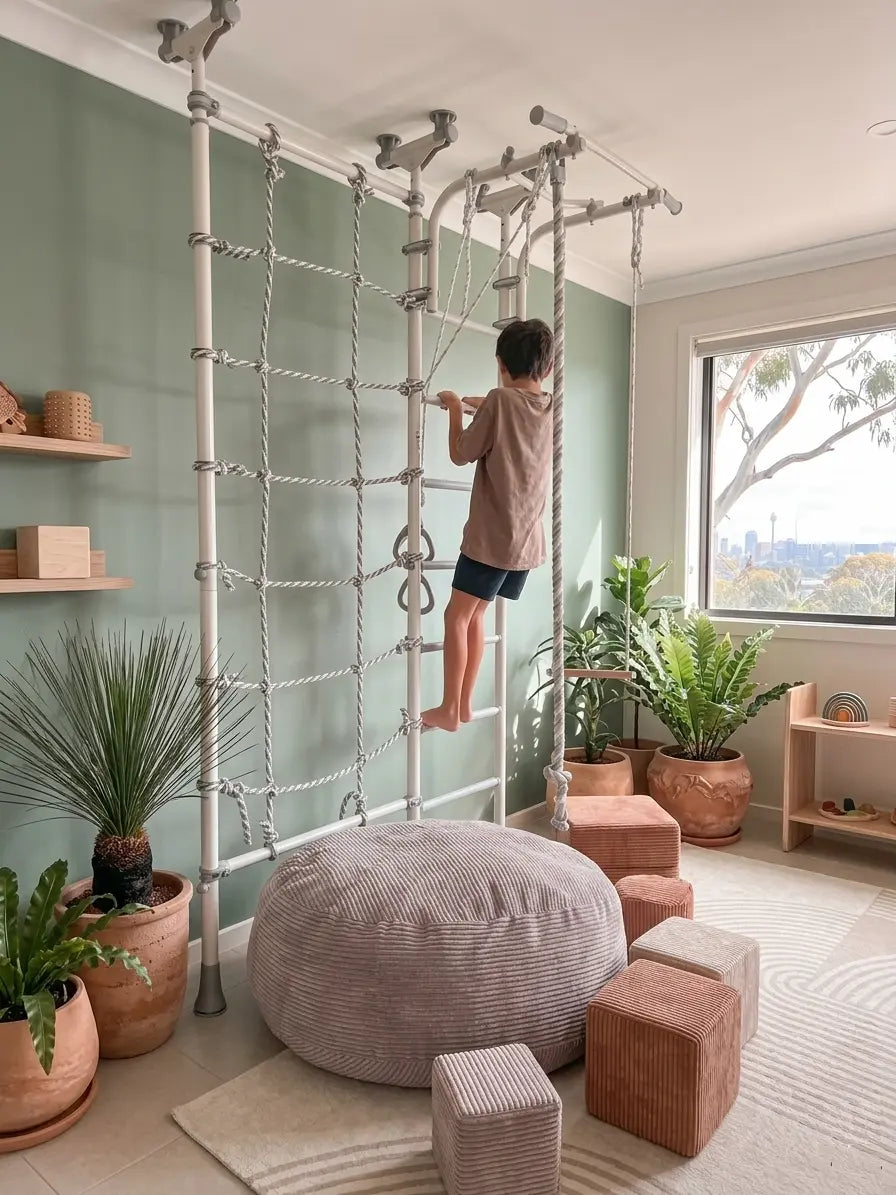
Indoor monkey bars are ideal for children aged 3 years and up, providing a safe and engaging way to build strength, balance, and coordination from an early age. They encourage active play that helps develop gross and fine motor skills, improves body awareness, and builds confidence as kids learn to climb, swing, and explore at their own pace. That said, adult supervision is always required to ensure safe play. Parents or caregivers should stay close to guide children, especially when they’re still learning to grip and balance properly. Setting up soft landing mats beneath the play area is essential to cushion any slips or falls, and it’s equally important to keep the surroundings clear of furniture, toys, or other hard objects that could pose a risk.
Before introducing alone time with monkey bars, we should look for these key developmental milestones that indicate readiness:
- Sustained hanging ability - Can hang from a single bar for 10+ seconds without assistance
- Instruction comprehension - Successfully follows multi-step directions and safety protocols
- Safety awareness - Demonstrates understanding of rules like proper spacing and taking turns
- Adequate grip strength - Shows ability to maintain firm grasp during physical activities
However, I cannot stress enough that age alone shouldn't determine readiness. We must assess each child individually, as development varies dramatically. I've seen confident 4-6 year-olds master monkey bars while some 8+ year-olds still need significant support.
When evaluating readiness, we should observe the child's overall physical confidence, their ability to support their body weight during playground activities, and their willingness to attempt challenging movements. Start with assisted practice, allowing children to build strength gradually while maintaining safety. Remember, rushing this developmental milestone can lead to falls and injuries, potentially creating lasting fear of playground equipment. Our role is ensuring each child progresses at their own pace while building the foundation skills necessary for safe, enjoyable monkey bar use.
Essential Safety Framework
When I set up monkey bar activities, I always start with a comprehensive safety check that protects every child in my care. The foundation of safe monkey bar play begins with proper surface preparation and equipment inspection.
Surface and Inspection Standards
I ensure our playground is a premium quality equipment preferably German or European standards as they are pioneers for precision engineering and designing. Then the surface beneath requires a good impact-absorbing material. I prefer quality vinyl leather or rubber tiles that provide consistent cushioning. I maintain a good area of clearance around all equipment and verify cross-section spacing too.
Clothing and Supervision Guidelines
Before any child approaches the monkey bars, I check they're wearing closed-toe shoes and fitted clothing without loose strings or jewelry that could catch. I position myself where I can spot effectively, typically standing slightly ahead of the child's path with clear sightlines to both ends of the equipment.

Pre-Activity Safety Rules
I establish these non-negotiable rules with every group:
- Equipment inspection first - We check bars for any damage, loose or slippery surfaces.
- One child at a time - No rushing or crowding on the equipment (there are exceptions to this rule on a case per case basis)
- Proper dismounting - Always drop with bent knees, never jump backward
- Know your limits - Stop immediately when arms feel tired or grip weakens
- Clear landing zone - Other children stay outside the safety perimeter
Ongoing Maintenance Protocols
I conduct frequent visual inspections for damage, or loose components. Monthly detailed checks include testing bar stability and surface depth measurements. This systematic approach creates an environment where children can challenge themselves safely while I maintain confidence in our risk management. Remember, our role isn't to eliminate challenges, it's to ensure children can pursue physical development within carefully managed safety parameters.
Physical Preparation and Strength Building
Pre-Monkey Bar Exercise Program - How to train for monkey bars without monkey bars?
I've developed this comprehensive pre-monkey bar program after working with children who struggled with upper body strength. Building these foundational skills transforms monkey bar challenges into achievable victories.
Essential Foundation Exercises
Dead Hangs: We start with simple hanging from a single bar. I encourage children to grip the bar with palms facing away, keeping shoulders engaged. Start with very short hangs, just a few seconds at a time, to help them get used to gripping the bar without feeling scared or strained. A low bar is best, ideally at a height where their feet can still touch the floor or a soft mat, so they feel supported and can step down easily. Always use a padded surface underneath to cushion any slips or jumps, and encourage them to bend their knees before landing.
Bear Walks: These are game-changers for upper body development. Encourage them to start on all fours, then lift their knees slightly off the ground so only their hands and feet touch the floor. Their hips should be a little higher than their shoulders, and their back should stay flat like a tabletop. Tell them to walk slowly, moving the opposite hand and foot together: right hand, left foot, then left hand, right foot. It’s okay if they move a bit like a wobbly bear at first; the goal is control, not speed. Remind them to keep their arms straight but not locked, and press the floor away to protect their shoulders: this helps them stay strong and stable instead of collapsing into their joints. Their fingers should face forward, palms spread wide, gripping the ground like little paws. Keep the movement light and playful: try fun challenges like “bear race to the couch” or “quiet bear sneaks across the forest” to keep them engaged while building great upper body awareness and strength.
Grip Strength Activities: Using playground equipment creatively works wonders. We squeeze tennis balls, hang from different bar thicknesses, and practice "monkey grips" on various surfaces. I also introduce finger walks.
Core and Flexibility Training
Modified Planks: We start with knee planks, progressing to full planks. I turn these into "plank challenges" where children hold the position while I tell engaging stories.
Shoulder Stretches: Arm circles, cross-body stretches, and gentle overhead reaches prepare shoulders for monkey bar demands. We incorporate these into warm-up games.
Making It Fun
I transform exercises into adventures. Dead hangs become "hanging like a sloth," bear walks turn into "exploring the jungle," and grip exercises become "monkey training academy." Using imaginative play keeps children engaged while building essential strength.
Remember, every child progresses differently. I celebrate small victories and adjust timelines based on individual needs. Consistency matters more than speed: we're building confidence alongside physical capabilities.
This systematic approach ensures children develop the muscular endurance, grip strength, and core stability necessary for monkey bar success while maintaining the joy of movement.
Step-by-Step Teaching Progression
Building Confidence and Managing Fear
When I work with children approaching monkey bars for the first time, I've learned that their initial reaction often tells me everything I need to know about their comfort level. Height anxiety is completely normal, and I've found that acknowledging these feelings creates trust.
I start by letting hesitant children observe others playing. "You can watch from here as long as you need," I tell them. This removes pressure and allows natural curiosity to develop. For anxious children, I begin with lower playground structures or even create makeshift low bars using cones and pool noodles.
My language matters enormously. Instead of "Don't be scared," I say, "I can see this feels big right now. That's okay." I use specific encouragement: "Look how strong your grip is!" or "You held on for three whole seconds: that's amazing progress!"
I remember Aaron, a then four-year-old who wouldn't even touch the bars initially. We spent two weeks just standing underneath them, talking about what made them feel sturdy. Then he started hanging for one second, gradually building to swinging between bars. The breakthrough came when he declared, "I'm ready to try moving!" His patience with himself, supported by our consistent encouragement, led to confident traversing within a month.
Setting micro-goals works beautifully: "Today, let's just hold on and count to five." These small victories build genuine confidence. I've learned that rushing never helps: every child's timeline is different, and respecting their pace creates lasting success.
Fundamental Technique Development
When I teach children proper monkey bar technique, I always start with the foundation: correct hand placement. We begin by showing them the overhand grip - palms facing away from their body, with all four fingers wrapping over the top of the bar. The crucial detail I emphasize is wrapping the thumb completely around the bar to create a secure "lock" grip. I tell kids to imagine their hands are like strong clamps holding tight to the bar.
For the basic forward-moving technique, I guide children through these essential steps:
Starting Position: We position them hanging from the first bar with arms slightly bent, shoulders engaged, and feet off the ground.
Weight Transfer: I teach them to shift their weight to one hand while reaching forward with the other. The key is maintaining that secure grip throughout the movement.
Body Positioning: We practice keeping their body slightly forward-leaning, with core muscles engaged to prevent excessive swinging.
Controlled Movement: I emphasize smooth, deliberate movements rather than rushing or jerky motions.
Common mistakes: I frequently observe include using an underhand grip, forgetting to wrap the thumb, and wild, uncontrolled swinging. When I see these issues, I immediately stop the child and demonstrate the correct technique again.

Here's my progression sequence for building monkey bar skills:
● Assisted hanging - Adult support while child grips bar
● Independent hanging - Child holds position for 10-15 seconds
● Hand-walking along single bar while feet remain on ground
● One-bar transfer - Moving from first to second bar only
● Two-bar sequence - Connecting multiple transfers
● Full traverse - Independent movement across entire set
I've found that mastering each level before advancing prevents frustration and builds confidence. Remember, every child develops at their own pace, so I always celebrate small victories and encourage consistent practice. With proper technique and gradual progression, most children can successfully navigate monkey bars while developing valuable upper body strength and coordination.
Advanced Skills and Problem-Solving
When I work with children who've mastered basic monkey bar skills, I focus on building their endurance and tackling more complex challenges. We use structured practice routines that gradually increase duration: starting with three rungs, then five, then the full set. I've found that practicing twice weekly with rest days between sessions prevents burnout while building strength.
Cross-training activities make a huge difference in development. We incorporate rock climbing walls, rope climbing, and hanging exercises on pull-up bars. Swimming strengthens the same muscle groups while being gentler on joints. I also use resistance bands for children with limited upper body strength, allowing them to build confidence with assisted movements before attempting unassisted swings.
When children hit plateaus, I recognize this as completely normal. We break skills into smaller components: focusing on grip strength one week, swing momentum the next. Sometimes we step back to easier variations, which surprisingly helps breakthrough barriers. I've learned that pushing through plateaus often requires patience rather than intensity.
Fear after falls requires delicate handling. I never minimize a child's concerns or rush them back immediately. We start with stationary hanging exercises, gradually rebuilding trust in their grip strength. I use positive visualization techniques, having children mentally rehearse successful crossings before attempting them.
For children struggling with specific challenges, we modify approaches. Shorter children benefit from stepping stools for easier starts. Those with grip issues use gloves or chalk. We celebrate small victories: hanging for ten seconds is just as meaningful as completing full crossings.
Can't say this enough times, every child progresses differently. I focus on building their confidence alongside their physical abilities, ensuring they develop both skills and resilience that extend far beyond the playground.

My child has an amazing talent on the monkey bars, what should I do?
If they’re already flying across the monkey bars, the most high-profile pathways to think about are Olympic gymnastics, sport climbing (now an Olympic sport), and eventually parkour if it makes its way into future Games. To nurture that potential, keep things fun and pressure-free: regular play at the park, a recreational gymnastics class to build technique and flexibility, and maybe some kids’ climbing sessions to develop grip strength and confidence. As they get older, you can look at a solid gymnastics club with a development squad or a climbing gym with junior coaching programmes. The key is steady support rather than pushing too hard too early; the Aussie athletes who make it to the big stage usually start by simply loving what they do.
Monitoring Progress and Safety Considerations
Progress Tracking and Celebration
I've found that tracking children's monkey bar progress becomes much more meaningful when we shift our focus from "Can they cross the bars?" to "How are they growing stronger and more confident?"
Creating Achievable Milestones
I recommend breaking down monkey bar skills into smaller victories. Start by celebrating when children can hang for 10 seconds, then progress to moving one hand, then two rungs, and so forth. I use photo documentation to capture these moments: children love seeing their journey unfold through pictures.
Simple skill checklists work wonderfully too. I create visual charts where children can check off achievements like "tried the monkey bars today" or "moved one hand forward."
Meaningful Recognition
Instead of saying "You're so strong," I focus on effort: "I noticed how you kept trying even when your arms got tired" or "You figured out a new way to grip the bar!" Sticker charts, high-fives, and letting children share their progress with parents create lasting motivation.
Building Transferable Skills
I connect monkey bar skills to other activities: rock climbing walls, rope climbing, or even playground swings. This helps children see how their problem-solving and strength-building transfers everywhere.
Child-Led Goal Setting
I involve children by asking, "What would you like to try next on the monkey bars?" Their self-chosen goals often surprise me and create deeper engagement. Whether it's hanging longer or attempting their first swing, their ownership of the process makes every small victory more meaningful.
Emergency Preparedness and First Aid
We know that monkey bar activities, while fantastic for building strength, occasionally result in minor injuries. I've found that being prepared makes all the difference when accidents happen.
Common Monkey Bar Injuries
We typically see minor scrapes from falls and mild sprains from awkward landings. Most injuries occur when children attempt moves beyond their current ability or when they're fatigued but continue playing.
Prevention Strategies
I always encourage children to recognize their limits. We teach them to stop when their hands feel slippery or when their grip weakens. Proper supervision means watching for fatigue signs and ensuring appropriate fall zones beneath equipment.
Basic First Aid Response
For minor scrapes, we clean wounds gently with water and apply adhesive bandages. For more serious ones we get in the experts. I maintain a simple protocol: assess the situation, provide immediate care, contact emergency services if needed (call 000). We keep emergency contact information readily accessible and ensure mobile phones are charged.
Most importantly, we model calm responses during incidents. Children learn from watching how we handle emergencies, building their confidence for future playground experiences while maintaining safety awareness.

Conclusion and Key Takeaways
As we wrap up our journey through monkey bar mastery, I want to emphasize that safety must always come first. We've learned that proper preparation checking equipment, ensuring adequate fall surfaces, and teaching correct grip techniques sets the foundation for success.
Remember, every child develops at their own unique pace. What takes one child weeks might take another months, and that's perfectly normal. I encourage you to focus on gradual progression, starting with hanging exercises and building up arm strength before attempting full traversing.
The magic happens when we celebrate those small victories whether it's hanging for five extra seconds or making it one more rung than last time. These moments build the confidence that carries children through challenges both on and off the playground.
I urge you to start today with safety preparations and age-appropriate physical readiness activities. Begin where your child is comfortable and progress slowly.
When children finally master the monkey bars, the transformation is remarkable. The physical strength, coordination, and unwavering confidence they develop becomes a foundation for tackling life's challenges with determination and self-belief.
0 comments